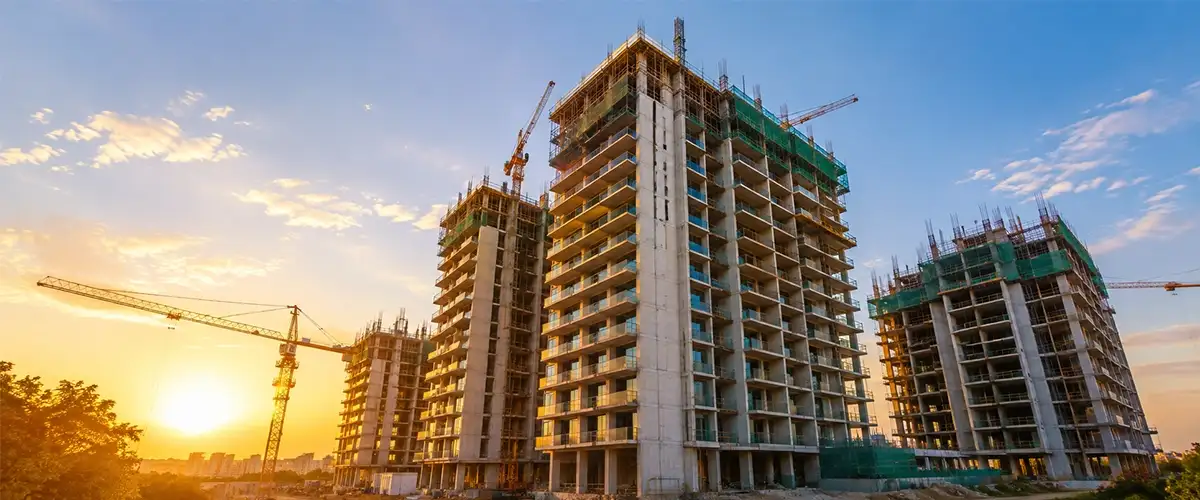
Navi Mumbai is entering a phase where infrastructure is no longer simply about improving connectivity. Roads, bridges, airports, rail corridors and public transport are increasingly influencing where people live, where businesses expand and how new residential communities develop.
For buyers evaluating property in the Panvel region, this wider infrastructure transformation is worth understanding.
The important question is not simply which projects are being built. It is how completed and planned infrastructure can influence accessibility, employment, urbanisation and long-term housing demand.
Why Infrastructure Matters to Real Estate
Real estate and infrastructure tend to develop alongside each other.
A new transport corridor can reduce travel friction. Better accessibility can attract businesses. New commercial activity can create employment. Employment can increase housing demand. As more residents arrive, demand for schools, healthcare, retail, recreation and other services can follow.
This creates a chain:
Infrastructure → Accessibility → Economic Activity → Employment → Residential Demand
It is one reason Navi Mumbai infrastructure projects have become an important consideration for people researching the region’s property market.
However, buyers should understand that infrastructure does not automatically increase the value of every nearby property.
The quality of the development, present-day accessibility, neighbourhood conditions, pricing and actual demand remain critical.
Atal Setu Has Changed Regional Connectivity
The Mumbai Trans Harbour Link, widely known as Atal Setu, is one of the most significant completed transport projects affecting the Mumbai-Navi Mumbai relationship.
According to MMRDA, the link is approximately 21.8 km long, including a 16.5-km sea bridge and around 5.5 km of land sections. It opened to traffic on January 13, 2024. MMRDA says the project was designed to improve connectivity between Mumbai and the Navi Mumbai mainland and support development in Navi Mumbai and Raigad.
Its significance for property buyers is broader than simply reducing travel time.
Improved connections can make different parts of the metropolitan region more accessible to one another. This can influence where people consider living and how businesses evaluate locations.
For buyers, the practical takeaway is simple:
Look at connectivity as a network, not as a single road.
A property can benefit from multiple transport options even when one particular route is not the primary commute.
Navi Mumbai International Airport Adds Another Growth Layer
Airport infrastructure can have an impact far beyond passenger travel.
A large airport can support aviation-related services, logistics, hospitality, commercial activity and employment. Those activities can contribute to a larger economic ecosystem around the airport over time.
The Navi Mumbai International Airport is now an operational part of the region’s infrastructure landscape, making aviation a more immediate factor in evaluating the area’s future than it was when the project existed primarily as a proposed development.
For residential buyers, the more useful question is not:
“Is the property near the airport?”
Instead, ask:
“How does the airport fit into the region’s wider economic and transportation network?”
That distinction produces a more realistic assessment.
Rail Connectivity Remains Essential
Roads and airports may dominate infrastructure discussions, but rail remains fundamental to everyday urban mobility.
CIDCO identifies the Mankhurd–Belapur–Panvel rail route as an operational connection between Mumbai and Panvel, while the wider Navi Mumbai rail network links several important nodes across the planned city.
For residential markets, dependable rail connectivity can be particularly important for daily commuters.
It also highlights why buyers should assess several transportation modes before choosing a home.
A location supported by roads alone may offer convenience for private vehicles, while a combination of road and rail connectivity can create greater flexibility for households with different commuting patterns.
Panvel–Karjat Rail Expansion and Future Mobility
Another infrastructure development relevant to the wider Panvel region is the Panvel–Karjat suburban corridor.
MRVC documentation describes the project as a double-line suburban corridor of roughly 29.6 km, sanctioned under MUTP-III. The project is intended to strengthen suburban rail connectivity between Panvel and Karjat and respond to increasing development and demand in the corridor.
For buyers, projects such as this should be treated differently from completed infrastructure.
A proposed or developing corridor may influence future accessibility, but buyers should not build a purchase decision around an assumed completion date.
The sensible approach is to evaluate:
- What connectivity exists today?
- What is officially under construction?
- What remains proposed?
- How relevant would the improvement be to your actual commute?
This distinction is especially important when assessing property in an emerging market.
Metro Expansion and the Bigger Mobility Network
Navi Mumbai’s transportation planning is also moving towards greater integration between road, rail and metro systems.
CIDCO’s mobility planning recognises the need to integrate Navi Mumbai and the NAINA region with emerging developments such as NMIA and other economic centres.
MMRDA has also proposed a rail-based MTHL Metro Link intended to connect Mumbai with the mainland and extend towards the Panvel-Pen section, with interchange opportunities with existing and proposed rail systems.
For a homebuyer, this signals an important change in how regional accessibility may evolve.
Future mobility is increasingly being planned as an interconnected system rather than a collection of isolated projects.
What Does Infrastructure Mean for Homebuyers?
Infrastructure matters most when it improves real-life usability.
A buyer should therefore evaluate infrastructure through everyday questions.
Can You Reach Work Comfortably?
Consider your actual workplace rather than a generic “Mumbai connectivity” claim.
How Many Travel Options Do You Have?
Road, rail and public transport options provide greater flexibility when circumstances change.
Are Essential Services Developing?
Residential growth becomes more sustainable when education, healthcare, retail and everyday services expand alongside housing.
Is the Infrastructure Already Operational?
Give greater weight to completed infrastructure when assessing present-day convenience.
Is Future Infrastructure Officially Supported?
If a project is still proposed, verify its status through credible government or implementing-agency sources.
Infrastructure Alone Is Not Enough
A common mistake in emerging real estate markets is to treat infrastructure as the only investment criterion.
It isn’t.
A strong purchase decision should combine infrastructure analysis with developer credibility, project quality, legal due diligence, total acquisition cost, construction status, neighbourhood development and personal requirements.
For end-users, today’s convenience may matter more than a future road or rail project.
For long-term investors, future infrastructure may carry greater weight—but only when supported by credible development plans and realistic demand assumptions.
This is why understanding Godrej Golf City Navi Mumbai should come after understanding the larger infrastructure environment rather than replacing that research.
The Residential Ecosystem Is the Next Consideration
Infrastructure can open the door to growth.
But residents need much more than roads and transport.
As new neighbourhoods mature, buyers increasingly look for communities that combine housing with green spaces, recreation, social infrastructure and everyday conveniences.
That is where a larger planned development can become relevant within an infrastructure-led residential corridor.
Those researching Golf City Navi Mumbai can therefore consider the project within the broader evolution of the region, while separately evaluating its own specifications, planning, documentation and suitability.
Likewise, Godrej Golf City Panvel can be assessed as an individual residential development within this wider infrastructure and urbanisation story.
A Better Way to Evaluate Infrastructure-Led Growth
Instead of asking whether infrastructure will make a property “appreciate,” consider a more practical framework:
Connectivity: Does it improve actual travel?
Accessibility: Does it connect the location to important employment and commercial areas?
Economic Activity: Is new infrastructure encouraging businesses and jobs?
Residential Demand: Is there a genuine reason for people to live nearby?
Social Infrastructure: Are schools, healthcare, retail and community facilities developing?
Time Horizon: Are you buying for today’s lifestyle or a longer-term plan?
This framework helps separate genuine infrastructure-led opportunity from speculative marketing.
What This Means for Panvel
The broader Navi Mumbai region is developing through multiple layers of transportation and economic infrastructure.
Completed projects such as Atal Setu have already changed regional mobility, while airport operations, rail improvements and planned transport corridors continue to shape the longer-term development picture.
For prospective homebuyers, this makes infrastructure an important part of the research process—but not the entire decision.
The strongest approach is to understand the region first, then compare individual residential developments based on actual requirements.
Take the Next Step
If the evolving Panvel and Navi Mumbai infrastructure ecosystem fits your long-term residential plans, the next step is to examine suitable developments directly.
Explore Godrej Golf City at www.godrejgolfcity.com or contact +91 8177834563 to enquire about the project and arrange a site visit.
Infrastructure can shape a region’s future. A well-researched home decision should shape yours.